Graphic design is a creative process, it often ivoves a client and a designer and usually completelted in conjunction with producers of form (i.e., printers, signmakers, etc.)—undertaken in order to convey a specific message (or messages) to a targeted audience. The term "graphic design" can also refer to a number of artistic and professional disciplines that focus on visual communication and presentation. The field as a whole is also often referred to as Visual Communication or Communication Design. Various methods are used to create and combine words, symbols, and images to create a visual representation of ideas and messages. A graphic designer may use a combination of typography, visual arts and page layout techniques to produce the final result. Graphic design often refers to both the process (designing) by which the communication is created and the products (designs) which are generated.
“the art or profession of visual communication that combines images, words, and ideas to convey information to an audience.”
Friday, 16 March 2012

Friday, 9 March 2012
Abstract Impressionism - My opinion

This would be my favourite art movement out of them all, because of the way it has been created and the range of colours used. I like how realistic it is and its not all painted in a smooth way to purposely look realistic, it looks like they have used some sort of material (e.g. card or using a palette knife) to get that block effect. The image makes me think of a night time walk past the fansy lights and festivals. They're really warm colours, none bring out any darkness or sad feelings, makes me feel warm and happy. The artists name is Leonid afremov and he has done a lot of oil on canvas work, very simular to this one. But I do think it's amazing the way he can take any object, place or person and have this style with the patchy backgrounds.
Monday, 5 March 2012
Photorealism


Photorealism  Photorealism is the genre of painting based on using the camera and photographs to gather information and then from this information creating a painting that appears photographic. The term is primarily applied to paintings from the United States art movement that began in the late 1960s and early 1970s.
 Photorealism is the genre of painting based on using the camera and photographs to gather information and then from this information creating a painting that appears photographic. The term is primarily applied to paintings from the United States art movement that began in the late 1960s and early 1970s.
Minimalism


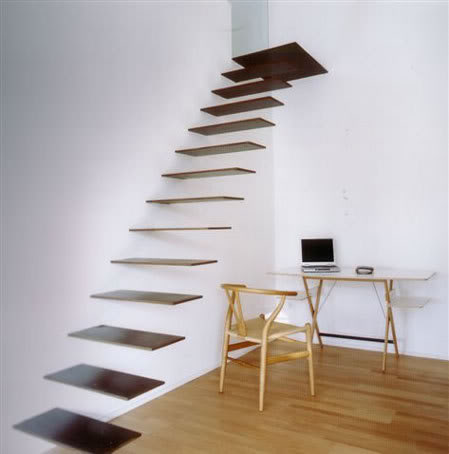

Minimalism
Minimalism describes movements in various forms of art and design, especially visual art and music, where the work is set out to expose the essence, essentials or identity of a subject through eliminating all non-essential forms, features or concepts. As a specific movement in the arts it is identified with developments in post–World War II Western Art, most strongly with American visual arts in the 1960s and early 1970s. Prominent artists associated with this movement include Donald Judd, John McCracken, Agnes Martin, Dan Flavin, Robert Morris, Anne Truitt, and Frank Stella. It is rooted in the reductive aspects of Modernism, and is often interpreted as a reaction against Abstract expressionism and a bridge to Postminimal art practices.
Friday, 2 March 2012
Futurism


 Futurism
Art Nouveau


Art Nouveau
Art Nouveau is an international philosophy and style of art, architecture and applied art—especially the decorative arts—that were most popular during 1890–1910.[2] The name "Art Nouveau" is French for "new art". It is known also as Jugendstil, , German for "youth style", named after the magazine Jugend, which promoted it, as Modern in Russia, perhaps named after Parisian gallery "La Maison Moderne", as Secession in Austria and Hungary after the Viennese group of artists, and, in Italy, as Stile Liberty from the department store in London, Liberty & Co., which popularised the style. A reaction to academic art of the 19th century, it was inspired by natural forms and structures, not only in flowers and plants but also in curved lines. Architects tried to harmonize with the natural environment. It is also considered a philosophy of design of furniture, which was designed according to the whole building and made part of ordinary life.


Abstract Impressionism


 Abstract Impressionism is a type of abstract painting (not to be confused with Abstract Expressionism, a similar but different movement) where small brushstrokes build and structure large paintings. Small brushstrokes exhibit control of large areas, expressing the artist's emotion and focus on inner energy, and sometimes contemplation, creating expressive, lyrical and thoughtful qualities in the paintings. The brushstrokes are similar to those of Impressionists such as Monet and Post-Impressionists such as van Gogh and Seurat, only tending toward Abstract Expressionism. While in the action painting style of Abstract Expressionism brushstrokes were often large and bold and paint was applied in a rapid outpouring of emotion and energy, the Abstract Impressionist's short and intense brushstrokes or non-traditional application of paints and textures is done slowly and with purpose, using the passage of time as an asset and a technique. Milton Resnick, Sam Francis, Richard Pousette-Dart, and Philip Guston were notable Abstract Impressionist painters during the 1950s. Paul Jackson Pollock (January 28, 1912 – August 11, 1956), known as Jackson Pollock, was a major figure in the abstract expressionist movement, and Canadian artist Jean-Paul Riopelle helped introduce Abstract Impressionism to Paris in the 1950s.
Subscribe to:
Posts (Atom)